
Volleyball Rules: A Comprehensive Guide (2025-2028)
FIVB’s official rules, approved in 2024, are detailed in a 2025 PDF document covering game characteristics, facilities, equipment, and gameplay regulations․
This guide presents a comprehensive overview of the official volleyball rules as sanctioned by the Fédération Internationale de Volleyball (FIVB) for the period of 2025 to 2028․ These rules, meticulously detailed in the official FIVB document published in January 2025, serve as the governing standards for all levels of competitive play worldwide․
Approved by the 39th FIVB World Congress in 2024, the document – available as a PDF – outlines everything from the fundamental philosophy of refereeing to specific regulations concerning the playing area, equipment, and the intricacies of gameplay; Understanding these rules is crucial for players, coaches, referees, and enthusiasts alike, ensuring fair play and a consistent experience across all volleyball competitions․ This document provides clarity and standardization․
Rule Updates and Changes
The 2025-2028 FIVB rule set, detailed within the official PDF document, builds upon previous iterations while incorporating refinements to enhance the game’s flow and fairness․ While a comprehensive list of all changes requires direct reference to the source material, the document emphasizes a continued focus on player safety and minimizing unnecessary delays․
Key areas of potential adjustment, as suggested by the document’s structure, include clarifications regarding blocking techniques, attacking rules, and interpretations of faults and penalties․ Referees are expected to adhere strictly to these updated guidelines․ The FIVB continually evaluates and adjusts rules based on gameplay analysis and feedback from the volleyball community, ensuring the sport’s continued evolution and appeal․
Game Characteristics
Part 1 of the FIVB’s 2025-2028 rules PDF focuses on the philosophy of refereeing and the fundamental principles governing volleyball gameplay and spirit․
The Spirit of Volleyball
Volleyball’s essence, as outlined in the FIVB’s 2025-2028 rules document, transcends mere competition; it embodies fair play, mutual respect, and friendship amongst players and officials․
The rules are designed not to hinder this spirit, but to facilitate a dynamic and engaging game where teamwork and skillful execution are paramount․
Emphasis is placed on ethical conduct, promoting positive interactions, and upholding the integrity of the sport․
The document stresses that referees should interpret and apply the rules in a manner consistent with these core values, fostering an environment of sportsmanship and enjoyment for all involved․
Ultimately, the spirit of volleyball champions inclusivity and celebrates the pursuit of excellence through collaborative effort․
Objective of the Game
According to the FIVB’s 2025-2028 Official Volleyball Rules, the primary objective is for two teams of six players to separate the ball using a net․
Teams aim to score points by grounding the ball on the opponent’s court, and to prevent the same from happening on their own side․
The game is played to the best of five sets, with the first four sets played to 25 points and the final set, if necessary, to 15 points․
A team must win a set by at least two points․
Strategic teamwork, skillful ball control, and effective attacking/defending are crucial for achieving victory, as detailed within the comprehensive rulebook․
Playing Area & Equipment
The FIVB rules (2025-2028) detail specific requirements for the playing court, net, posts, and the volleyball itself, ensuring standardized gameplay․
Court Dimensions
According to the FIVB’s 2025-2028 rules, the volleyball court’s dimensions are precisely defined for both international and national competitions․ The playing court measures 18 meters in length and 9 meters in width, a standardized size crucial for fair play․ These dimensions are clearly outlined within the official rules document available as a PDF․
Furthermore, the rules specify detailed requirements for line markings, ensuring accuracy and consistency across all levels of play․ Understanding these dimensions is fundamental for setting up a regulation court, as detailed in section 1․1 of the official document․ Proper court setup is paramount for adhering to the established guidelines and maintaining the integrity of the game․
Length and Width Specifications
The official 2025-2028 FIVB Volleyball Rules PDF explicitly states the playing court must be a rectangle 18 meters long and 9 meters wide․ These measurements are fundamental and non-negotiable for sanctioned competitions․ The document emphasizes precise adherence to these specifications for consistent gameplay․
Moreover, the rules detail that any deviation from these length and width parameters renders the court unsuitable for official matches․ Accurate measurement and marking are crucial responsibilities of event organizers, as outlined in section 1․1 of the PDF․ Maintaining these dimensions ensures fairness and prevents any competitive advantage gained through improper court setup, as per the official guidelines․
Zone Markings and Boundaries
According to the 2025-2028 FIVB Volleyball Rules PDF, the court features distinct zone markings crucial for gameplay․ These include the attack line, 3 meters from the net, defining the front-zone restrictions for back-row players․ Boundary lines, clearly delineating the playing area, are essential for determining ball-in or ball-out calls․
The PDF (section 1․3 & 1․4) specifies line width requirements – 5 cm – ensuring visibility for players and referees; Accurate marking of these zones is paramount for fair play and consistent officiating․ The center line divides the court equally, and side lines mark the lateral boundaries․ Proper zone markings, as detailed in the official document, are vital for a legally compliant volleyball court․
Playing Surface Requirements
The FIVB’s 2025-2028 Volleyball Rules PDF (section 1․2) outlines specific requirements for the playing surface․ It must be flat, horizontal, and uniform, ensuring player safety and consistent ball behavior․ Wood, synthetic, or rubber surfaces are permissible, but must avoid excessive slipperiness or irregularities․
The document details that the surface shouldn’t absorb moisture, impacting player footing․ Regarding environmental conditions (section 1․5 & 1․6), the PDF specifies acceptable temperature and lighting standards․ Maintaining a comfortable playing environment is crucial․ These guidelines, detailed within the official PDF, aim to standardize playing conditions across all levels of competition, promoting fair and safe gameplay․
Surface Material and Maintenance
According to the FIVB’s 2025-2028 Volleyball Rules PDF (section 1․2), acceptable surface materials include wood, synthetic materials, and rubber․ However, the document emphasizes avoiding surfaces that cause excessive slipperiness or present irregularities that could endanger players․ Regular cleaning and maintenance are vital․
The PDF doesn’t specify a particular maintenance schedule, but implies consistent upkeep to prevent moisture absorption and maintain a uniform playing surface․ Any repairs must restore the surface to its original condition․ Ensuring a safe and consistent playing area is paramount, as detailed within the official rules document, promoting fair competition and minimizing injury risk․
Temperature and Lighting Standards
The FIVB’s 2025-2028 Volleyball Rules PDF (section 1․5 & 1․6) outlines specific environmental requirements for play․ Ideal playing temperature should be between 18°C and 28°C (64°F and 82°F), ensuring player comfort and performance aren’t negatively impacted by extreme conditions․ Consistent temperature is crucial throughout the match․
Regarding lighting, the PDF mandates sufficient illumination to allow players, referees, and spectators to clearly see the ball and court markings․ Minimum lighting levels are required, avoiding glare or shadows that could obstruct vision․ These standards, detailed in the official document, prioritize player safety and fair officiating, contributing to a high-quality competitive environment․
The Net and Posts
According to the FIVB’s 2025-2028 Official Volleyball Rules PDF (section 2), the net and posts are critical components of the playing court․ The document details precise specifications for both, ensuring consistent playing conditions across all levels of competition․ Section 2․1 focuses on net height, differentiating between men’s and women’s regulations, which are essential for fair play․
Furthermore, the PDF (section 2․2 & 2․3) outlines the net’s structure, including mesh size and band dimensions, alongside post specifications like material and stability․ Side bands are also addressed, contributing to the net’s overall functionality and safety․ Adherence to these standards, as outlined in the official document, is paramount for official matches․
Net Height Regulations
The FIVB’s Official Volleyball Rules 2025-2028 PDF (section 2․1) explicitly defines net height as a crucial element for gameplay fairness․ These regulations vary based on the gender of the players, ensuring appropriate challenge and safety․ Consistent net height is vital for standardized competition across all levels, from recreational to professional play․
The document provides precise measurements, leaving no room for ambiguity․ Maintaining the correct height is the responsibility of officials before and during matches․ Deviations from these specified heights can significantly impact the game’s dynamics and are considered a fault․ Detailed specifications are readily available within the official PDF document for reference․
Men’s Net Height
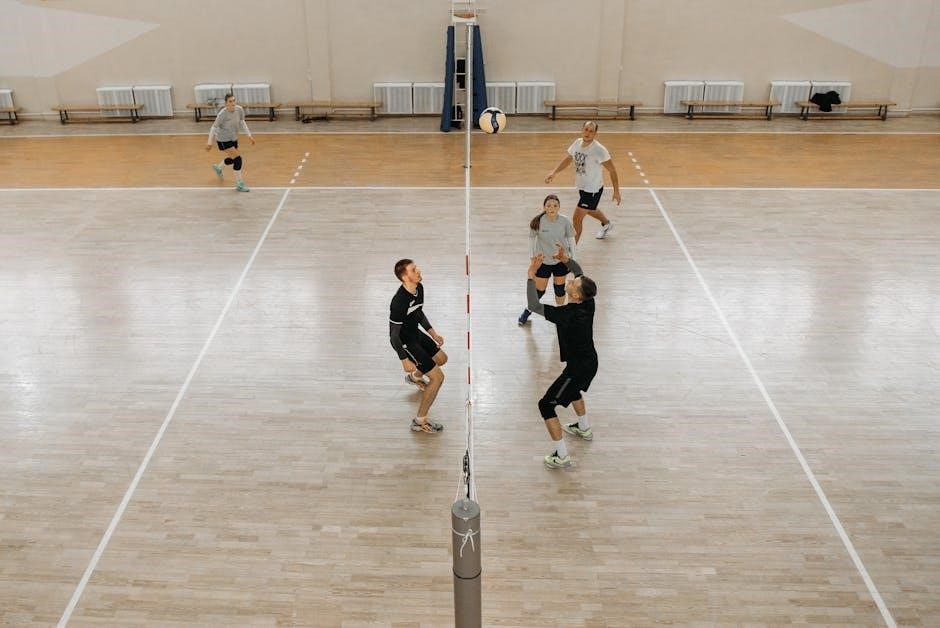
According to the FIVB Official Volleyball Rules 2025-2028 PDF, the standard net height for men’s volleyball is precisely 2․43 meters (approximately 7 feet 11 ⅝ inches)․ This height applies to all official international competitions and is a cornerstone of men’s gameplay․ Maintaining this specific height ensures a challenging yet fair playing environment for athletes․
The document emphasizes the importance of accurate measurement and consistent application of this rule․ Officials are responsible for verifying the net height before each match and addressing any discrepancies immediately․ Any deviation from 2․43 meters constitutes a fault and can impact the outcome of the game, as detailed in the official PDF․
Women’s Net Height
The FIVB Official Volleyball Rules 2025-2028 PDF specifies that the official net height for women’s volleyball is 2․24 meters (approximately 7 feet 4 ⅛ inches)․ This standardized height is crucial for maintaining a level playing field and ensuring fair competition across all international women’s matches․
Consistent with men’s regulations, the document stresses the necessity of precise net height measurement by officials prior to each game․ Any variance from the 2․24-meter standard is considered a fault, potentially influencing the game’s result․ The PDF provides detailed guidance for officials regarding proper measurement techniques and corrective actions, ensuring adherence to these critical rules․
Net Structure and Specifications
According to the FIVB’s 2025-2028 Official Volleyball Rules PDF, the net must be 1 meter (approximately 3 feet 3 inches) wide and 5 centimeters (approximately 2 inches) in mesh size․ It’s constructed from a dark color material, easily contrasting with the background, ensuring visibility for players and officials during gameplay․
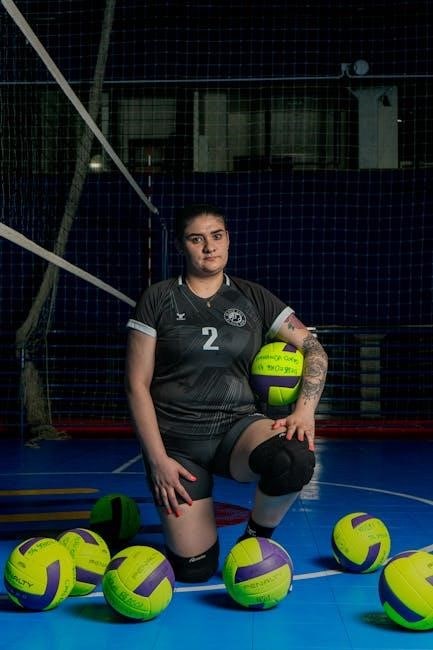
The PDF details that the net’s top edge features a white band 5 cm wide, continuously running its entire length․ Side bands, 10 cm wide, are attached vertically to the net, securing it to the posts․ These specifications are vital for consistent play and accurate officiating, as outlined in the comprehensive document․
The Volleyball
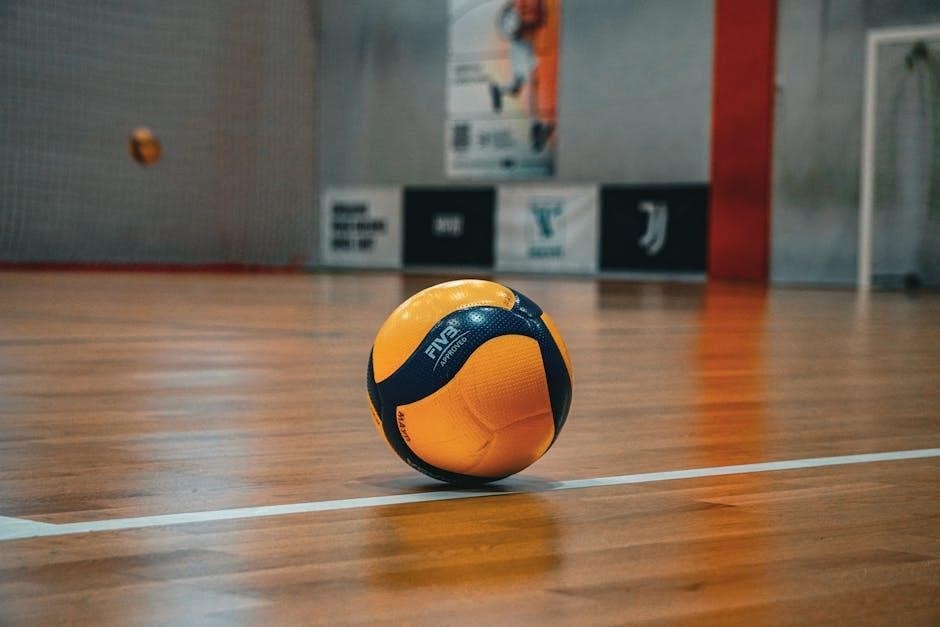
The FIVB’s Official Volleyball Rules 2025-2028, detailed in the accessible PDF, specifies the official volleyball must be spherical, constructed from leather or synthetic material, and feature a colorful design․ It’s crucial for consistent gameplay and is subject to strict regulations․
The document outlines precise specifications for circumference (65-67 cm for men, 62-64 cm for women) and weight (260-280 grams for men, 230-250 grams for women)․ Maintaining correct ball pressure is also paramount, ensuring optimal performance as detailed within the comprehensive PDF guide․
Official Ball Specifications
According to the FIVB’s 2025-2028 Official Volleyball Rules PDF, the ball must be spherical and constructed using leather or a synthetic material․ The detailed document emphasizes a consistent, colorful design for enhanced visibility during play․ Specific circumference measurements are mandated: 65-67 centimeters for men’s volleyballs and 62-64 centimeters for women’s․
Furthermore, the PDF outlines precise weight requirements, stating men’s balls should weigh between 260-280 grams, while women’s balls must fall within the 230-250 gram range․ These specifications, readily available in the official rules PDF, ensure fair and standardized competition․
Ball Pressure and Weight
The FIVB’s 2025-2028 Official Volleyball Rules PDF meticulously details acceptable ball pressure and weight parameters․ For men’s competition, the ball must weigh between 260 and 280 grams, ensuring a substantial feel during serves and attacks․ Women’s volleyballs have a slightly lighter weight range, specified as 230 to 250 grams, accommodating differing physical strengths․
Internal pressure is also crucial; the PDF recommends a pressure of 0․325 kPa (4․6 psi)․ Maintaining these specifications, as outlined in the official document, is vital for consistent ball behavior and fair play across all levels of competition, as detailed within the PDF․
Gameplay Rules
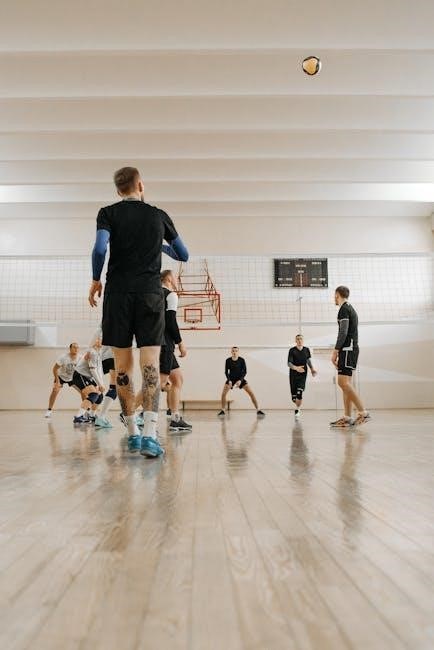
The official 2025-2028 FIVB rules PDF outlines serving, blocking, and attacking regulations, alongside detailed descriptions of faults and associated penalties․
Serving Rules
According to the FIVB’s 2025-2028 official rules document, serving initiates each rally; the server must stand behind the end line, contacting the ball with one hand or arm․
The PDF details specific serving techniques, including the jump serve and float serve, and clearly defines faults such as stepping on or over the end line during the serve․
Furthermore, it outlines the correct service order based on team rotation, ensuring fair play throughout the match․
Any violation of these serving regulations results in a point for the opposing team, as meticulously explained within the comprehensive rules PDF․
Serving Techniques and Faults
The FIVB’s 2025-2028 rules PDF details acceptable serving techniques, encompassing underhand and overhand serves, including the increasingly popular jump serve․
However, the document meticulously outlines numerous serving faults leading to point deductions․ These include foot faults – stepping on or over the end line – failing to contact the ball within the allotted time, and serving the ball out of bounds․
The PDF also clarifies illegal serves, such as throwing the ball before striking it or using an illegal tossing motion․
Understanding these nuances, as presented in the official rules, is crucial for both players and referees․
Service Order and Rotation
According to the FIVB’s 2025-2028 rules PDF, teams must maintain a consistent service order throughout each set․ This order is established based on the lineup at the start of the set and is determined by draw․
Following a side-out – when the receiving team wins a rally – players rotate one position clockwise․ This rotation ensures all players have an opportunity to serve and play in both front and back rows․
The PDF clarifies that incorrect rotation, such as serving out of turn, results in a penalty and a point for the opposing team․
Adhering to these rotation rules is fundamental to fair play․
Blocking Rules
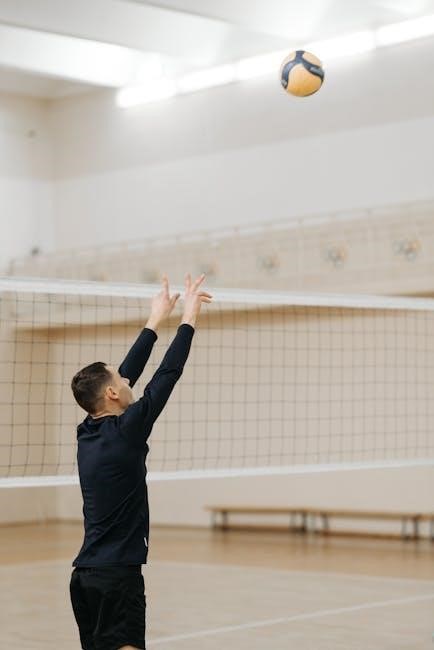
The FIVB’s 2025-2028 official rules, detailed in the PDF, define blocking as actions near the net to intercept the ball coming from the opponent․ Blockers can reach beyond the net, provided they don’t contact the ball before the opponent’s attack․
A block doesn’t count as one of the team’s three hits․ Blocking faults include reaching over the net before the opponent attacks, or interfering with an opponent’s legitimate attack․
The PDF emphasizes that a blocker’s hands must remain within the blocking zone․
Violations result in a point for the opposing team, upholding fair play and strategic blocking techniques․
Attacking Rules
According to the FIVB’s 2025-2028 official rules PDF, attacking involves forcefully sending the ball over the net with the intention of scoring․ Attackers can use any part of the body above the waist, but specific restrictions apply․
Players cannot complete an attack hit while entirely in the opponent’s court, or from the back row area, unless jumping from behind the attack line․
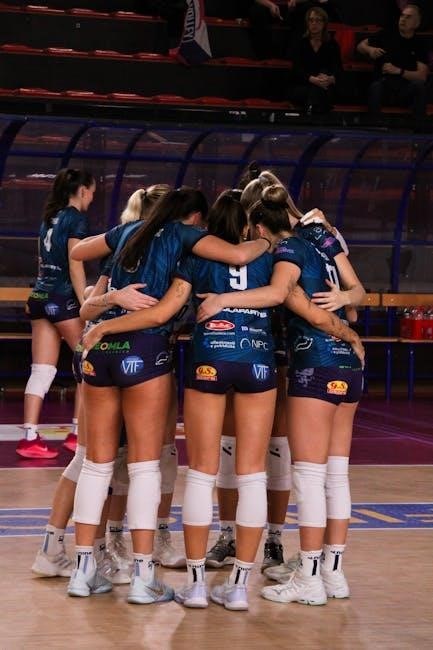
The document clarifies that an attack hit is any intentional ball contact directed towards the opponent’s court․
Faults include illegal back-row attacks and stepping over the attack line during the hit, resulting in a point for the opposing team․
Faults and Penalties
The FIVB’s 2025-2028 official rules PDF details numerous faults leading to penalties․ These include serving errors like foot faults or illegal serves, net touches during play, and boundary faults where the ball lands out of bounds․
Double contacts, lifts, and throws are also considered faults during ball handling․ Additionally, intrusions under the net, and attacking faults, such as illegal back-row attacks, result in penalties․
Penalties typically award a point and service to the opposing team․
The referee’s judgment is final, and unsportsmanlike conduct can lead to warnings or even disqualification, as outlined in the official document․